After the Milligram: A Self-Audit for Next-Day CBD Fog

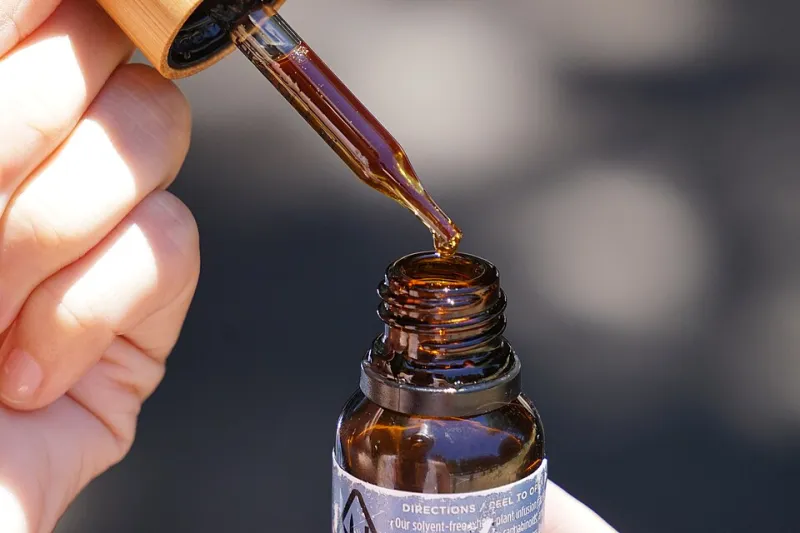
Photo: Mia Gaitanidis, CC BY-SA 4.0, via Wikimedia Commons
The phrase 'CBD hangover' is informal, and it is not a recognised medical condition. That does not make the experience less real for experienced users who wake after a heavy CBD evening feeling flat, dehydrated or mentally cloudy. At CBD Intense, we are less interested in whether the term is clinically precise than in what the pattern can tell a user about dose, format, timing and context.
This is an education-led opinion piece, not a diagnosis and not a warning against high-strength CBD. Most users of potent products do not report next-day problems. But when they do, the cause is often a combination of ordinary variables rather than a single villain. The following self-audit is designed to make those variables visible.
What the phrase describes, and what it does not
Users describing a CBD hangover typically mention dry mouth, a dull headache, fatigue, reduced motivation, slower word-finding or broken sleep. Some also mention vivid dreams or a feeling of having slept lightly. These symptoms overlap with dehydration, alcohol, caffeine withdrawal, poor sleep, stress, seasonal illness and ordinary tiredness. CBD may be part of the picture without being the whole picture.
It is important not to attribute every next-day symptom to CBD simply because CBD was consumed. Equally, it is unhelpful to dismiss the pattern entirely. A neutral self-audit asks three questions: what was taken, when was it taken, and what else was happening? The answers are usually more useful than a search for a single cause.
Culprit one: dose stacking
High-strength products make stacking easy. A user may take an oil at 18:00, a capsule at 20:00 and several vape doses at 22:00, then describe the total as 'a normal evening'. In milligram terms, that may be a much larger cumulative dose than intended. Because formats have different onset and tail profiles, the user may not feel the overlap until the following morning.
A simple 24-hour dose log is revealing. Record the product, the stated strength, the number of drops or capsules, the time and the format. Do not estimate from memory. If the total is surprising, that is the first finding. The aim is not to induce guilt but to replace a vague impression with a number.
Culprit two: carrier oils and excipients
High-strength oils often use MCT coconut oil or olive oil as a carrier. Some users report loose stools or nausea with larger volumes of MCT, particularly on an empty stomach. Others may react to flavourings or added terpenes. Dry mouth can also be a practical consequence of taking oily sublingual products without water, or of repeated vape use.
Carrier oils are not inherently problematic, but they are part of the dose. A high-strength product may require a small volume, while a lower-strength product may require a larger volume of carrier to deliver the same milligrams. Users who change products without accounting for this can mistake a carrier effect for a cannabinoid effect.
Culprit three: late-night timing
The tail is the most under-discussed part of CBD use. An oil taken at 21:00 may still be within its plateau or early tail at midnight. A capsule taken at 20:00 may extend further. A vape produces a short curve, but repeated late doses can create a series of peaks that fragment routine.
If next-day fog is the concern, move the final dose earlier for a week and observe. A useful starting point is two to three hours before bed for oils and three to four hours for capsules. This is not a rule; it is an experiment. Users should not change prescribed medicines or abruptly stop other treatments to accommodate the experiment.
Culprit four: minor cannabinoids and batch variation
Full-spectrum and broad-spectrum products contain minor cannabinoids such as CBG, CBN and CBC, alongside trace THC in some full-spectrum batches. These compounds may contribute to the overall profile, but their effects are not fully understood, and batch variation can matter. A product that felt clean in one batch may feel different in another.
A batch-specific certificate of analysis is the minimum standard. Look at total cannabinoids, THC content and the minor cannabinoid profile. If a product claims high strength but provides no batch-level data, that is a credibility issue independent of any hangover question.
Culprit five: interactions and context
CBD can interact with some medicines, particularly those metabolised by certain liver enzymes. This is not a reason for alarm, but it is a reason for disclosure. Users taking prescribed medication, especially warfarin, epilepsy medicines or sedatives, should speak to their GP or pharmacist before using high-strength CBD. They should not stop prescribed medication without clinical advice.
Alcohol, caffeine, antihistamines and sleep aids also belong in the audit. A CBD product taken alongside two glasses of wine and a late coffee is not being tested in isolation. The next-day picture is a combination, and the combination should be recorded.
A practical self-audit protocol
First, choose a seven-day window and keep one format only. This reduces the variables. Second, log dose, time, food and hydration. Third, reduce the daily total by a modest amount, such as 25 to 50 per cent, without changing prescribed medicines. Fourth, move the final dose earlier. Fifth, check the batch certificate of analysis. Sixth, review sleep, alcohol and caffeine separately.
At the end of the week, compare the first three days with the last three. If the fog lifts when the dose is simplified, the likely culprit is dose stacking or timing. If it persists, consider carrier oils, minor cannabinoids or non-CBD factors. If symptoms are severe, persistent or worrying, seek clinical advice.
Red flags for speaking to a GP
Most next-day symptoms are mild and short-lived. Users should seek medical advice promptly for persistent vomiting, severe abdominal pain, yellowing of the eyes or skin, dark urine, chest pain, difficulty breathing, confusion, unusual drowsiness or thoughts of self-harm. In the UK, NHS 111 can advise on urgent but non-emergency concerns. A pharmacist is a sensible first stop for interaction questions.
The point of this audit is not to pathologise high-strength CBD or to pretend that every cloudy morning has a cannabinoid cause. It is to replace assumption with observation. A product that consistently leaves a user flat is not necessarily a bad product, but it may be the wrong dose, the wrong format or the wrong time. The milligram is only the beginning of the story.