Reading the Arc: How High-Strength CBD Unfolds Across a UK Working Day
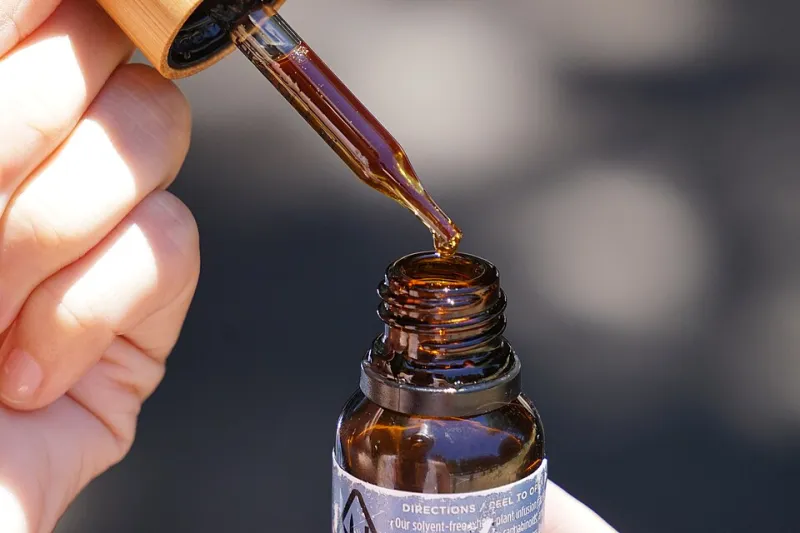
Photo: elsaolofsson, CC BY 2.0, via Wikimedia Commons
High-strength CBD is often sold as a simple arithmetic exercise: more milligrams, stronger effect. That shorthand is convenient for shelf talkers but poor preparation for real life. A 100 mg dose taken as a capsule at 07:30 does not behave like 100 mg taken as an oil at 21:00, and neither behaves like repeated small vape doses across an afternoon. The useful question is not only how much, but when the material arrives, how long it stays, and what else is happening in the day.
At CBD Intense, our Lab Analysis desk treats potency as a starting point rather than a conclusion. In this 2026 format review, we assessed three anonymised UK-market archetypes against the so-called intensity curve: a 20% full-spectrum oil delivering roughly 20 mg per 0.1 ml, a 50 mg broad-spectrum capsule, and a 30% vape cartridge. The aim was not to crown a winner but to understand how format changes the shape of the experience.
Why the label cannot describe the arc
CBD is lipophilic and poorly water-soluble. Its bioavailability depends heavily on route, formulation, food and individual physiology. Sublingual oils are absorbed partly through the oral mucosa and partly swallowed; capsules must pass through the gut and liver, where first-pass metabolism can alter the profile; inhaled vapes bypass the gut but produce a shorter, sharper curve. Two products with identical milligram totals can therefore produce different onset times, peaks and tails.
High-strength products add a practical complication: small volumes carry large doses. A 20% oil may deliver 20 mg in a single 0.1 ml drop, so a careless second drop is not a trivial adjustment. Capsules remove drop-size variability but fix the dose and delay absorption. Vape devices deliver rapid feedback, which encourages repeated use and makes cumulative dosing easy to miss. The curve is shaped by the user as much as by the laboratory.
Onset: the first 15 to 90 minutes
In our format benchmarking, the oil archetype produced noticeable effects from around 15 to 45 minutes when held sublingually for 60 to 90 seconds. The capsule archetype was slower, typically 45 to 120 minutes, depending on recent food. The vape archetype was fastest, with effects reported within 2 to 10 minutes, but with a narrower early window.
For a UK working day, onset matters most at the edges. A morning oil taken after breakfast may begin to register during the commute or the first inbox review. A capsule taken at the same time may not become apparent until mid-morning, which is useful for a long meeting block but unhelpful if the user expected immediate support. A vape is best treated as a short-interval tool, not a background layer for the whole day.
Peak and plateau: when high strength becomes visible
The oil archetype generally peaked between one and three hours, with a plateau that felt stable for roughly three to six hours in our desk review. The capsule archetype peaked later, often between two and four hours, and produced a longer plateau. The vape archetype peaked within 10 to 30 minutes and faded comparatively quickly.
This is where high-strength products separate from moderate ones. A 20 mg oil and a 50 mg capsule may both be described as high-strength, but the capsule's larger delivered dose and slower release can create a more pronounced plateau. That plateau is not intoxication; it is the period in which the user is most likely to notice the product's presence. It is also the period in which dose stacking becomes tempting, particularly if the first format feels subtle at the edges.
The tail: the part most users miss
Every format has a tail. For the oil archetype, we would expect a meaningful tail from around six to twelve hours after dosing. The capsule archetype can extend beyond twelve hours in some users. The vape archetype has a short tail, often one to two hours, but repeated use can create overlapping mini-curves that are harder to track than a single oil dose.
The tail explains why a late-afternoon top-up can affect the evening. It also explains why two products can feel identical at peak but differ at bedtime. A user who takes a capsule at 16:00 may still be within the plateau or early tail at 21:00. A user who vapes at 22:00 may experience a rapid rise and fall that disrupts routine more than a slower oil taken earlier.
A realistic timing framework for UK days
For a conventional office or hybrid working day, a useful starting principle is to match the format to the length of the task. A capsule taken with breakfast suits a long block of meetings or focused work because it arrives slowly and holds a plateau. An oil taken mid-morning or early afternoon suits users who want a more visible onset without committing to a capsule's longer tail. A vape should be reserved for short, deliberate intervals and should not be layered repeatedly without counting the cumulative dose.
For evenings, timing should be anchored to bedtime rather than to the moment the user remembers. An oil taken two to three hours before bed is a common starting point for users who want the plateau to have passed before sleep. A capsule may need three to four hours. A late vape is best avoided by users who already suspect that rapid peaks disturb their routine. These are framework suggestions, not prescriptions; individual response varies.
What we look for in high-strength products
Our Lab Analysis criteria remain consistent. We want a batch-specific certificate of analysis, a clear cannabinoid profile, a carrier oil disclosed on the label, and a dose-per-drop or dose-per-capsule figure that a normal user can verify. For vapes, we want device consistency and a clear statement of total cannabinoid content. High strength should mean high accountability, not merely a larger number on the front of the box.
The intensity curve is a better planning tool than milligrams alone. It encourages users to think in terms of onset, plateau and tail, and to treat formats as different instruments rather than interchangeable delivery vehicles. In a market that often sells potency as spectacle, that shift is quietly radical.