The Discount Denominator: Auditing High-Strength CBD Sale Offers by Cost per Milligram
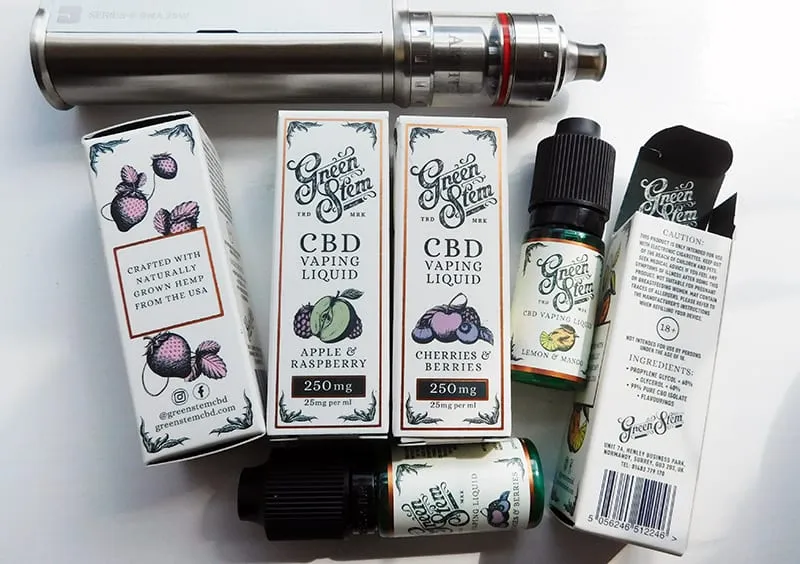
Photo: Ecig Click, CC BY-SA 2.0, via Wikimedia Commons
November in the UK has become a month of rolling promotions, and by mid-month the language of the sale has largely replaced the language of the product. Bottles are described by their percentage, their size, or their place in a bundle; the figure that determines value — the cost of each milligram of CBD — is often absent. For experienced users of high-strength CBD, the relevant question is not whether an offer looks generous, but whether the generosity survives conversion into a standard unit. The discount denominator is the cost per milligram, and it is the only figure that travels reliably between brands, bottle sizes and promotional formats.
Why Bottle Size Is a Poor Unit of Account
A 30 ml bottle at 10% CBD contains approximately 3,000 mg of CBD. A 10 ml bottle at 30% contains the same quantity. If the first is discounted by 30% and the second by 15%, the smaller bottle may still be the better purchase per milligram. Headline percentages compress this arithmetic into a single number that feels meaningful but is not comparable across formats. The same applies to bottle size: a larger bottle is not automatically better value, particularly when the product is short-dated or when the carrier oil and extraction method differ. The correct first step is to ignore the promotional badge and calculate the total CBD content in milligrams.
The Only Figure That Travels: Pence per Milligram
The calculation is straightforward. Multiply the stated strength percentage by the volume in millilitres, then multiply by ten. A 30 ml bottle at 20% contains 6,000 mg. Divide the sale price by the milligram total and multiply by 100 to express the result in pence per milligram. That figure can be compared directly with any other product, regardless of bottle size or stated percentage. It also exposes the point at which a discount is merely a rounding exercise. A bottle reduced from £90 to £72 looks substantial; at 6,000 mg it represents a move from 1.5p to 1.2p per milligram. Whether that is a genuine reduction depends on the brand's usual price, not on the size of the percentage shown on the page.
Short-Dated Stock and the Illusion of Abundance
November sales are an efficient mechanism for clearing stock that needs to move before the calendar turns. High-strength CBD oils have finite shelf lives, and a discount is sometimes compensation for a batch with a short remaining window. This is not automatically a reason to decline; it is a reason to read the batch information before the basket. A product with three months remaining may be excellent value for a daily user who will consume it within that period. The same product is poor value for someone who intends to keep it as a backup. The sale price should be judged alongside the expiry date, not in isolation from it. Where the retailer does not display batch dates, the pre-basket enquiry is part of the audit.
Relabelled Strengths and the Percentage Trap
A recurring feature of promotional periods is the relabelled strength. A product previously sold as 10% may appear in a sale as 1,000 mg, or a 20% oil may be presented as 2,000 mg per 10 ml. These are arithmetically equivalent descriptions, but the change of unit can make a familiar product appear new or improved. The audit should reconstruct the milligram total from whatever figures are given, then compare that total with the price. Where a brand has changed its labelling, the relevant question is whether the formulation, batch number or carrier oil has also changed. A new label on an old batch is not a new product.
Subscription Hooks: The January Reckoning
A discount that is contingent on a subscription is not a discount until the subscription terms are known. The common pattern is a first-order reduction followed by a recurring charge at the standard rate, sometimes with a minimum term. The November saving can be erased by January if the recurring price is higher than the user would otherwise have paid, or if cancellation is administratively awkward. The audit should separate the one-off price from the recurring price, calculate the cost per milligram for both, and note the cancellation window. A subscription that delivers a genuine per-milligram advantage across twelve months is a different proposition from one that front-loads a saving and recovers it later.
A Pre-Basket Checklist for November 2026
Before checkout, the following checks should be completed and, where possible, recorded:
- Calculate the total CBD content in milligrams from the stated percentage and volume.
- Divide the sale price by the milligram total to obtain pence per milligram.
- Compare that figure with the brand's non-sale price and with at least two comparable products.
- Check the batch number and expiry date; a short-dated batch changes the value calculation.
- Confirm whether the strength has been relabelled and whether the batch is the same as the one previously reviewed.
- Read the subscription terms, including recurring price, minimum term and cancellation process.
- Check whether delivery charges alter the per-milligram figure, particularly for smaller bottles.
- Retain the product page or order confirmation so that the offer can be audited after delivery.
The purpose of the checklist is not to discourage purchase during November sales. It is to ensure that the discount is measured in the same unit as the product. High-strength CBD rewards a slower arithmetic: the bottle that appears to offer the largest reduction may not offer the lowest cost per milligram, and the offer that survives January is the one whose denominator was checked before the basket was filled.