Before the Ignition: A 2026 UK Drug-Driving Checklist for High-Strength CBD Users

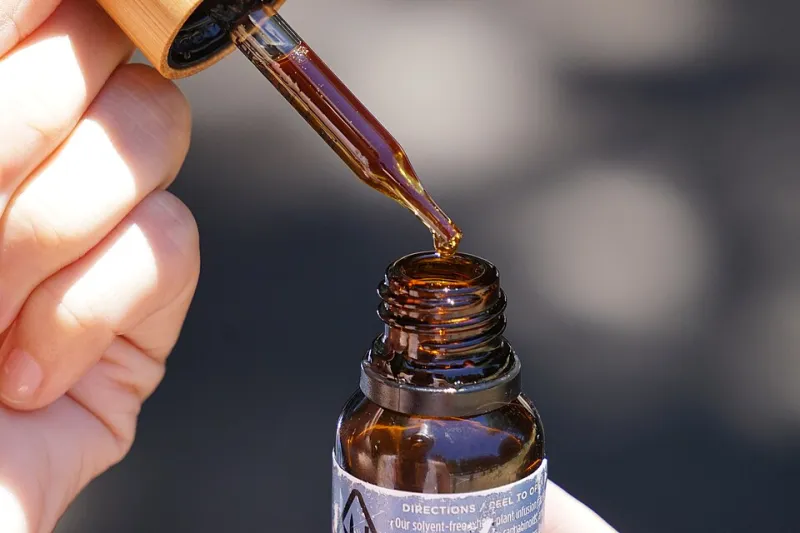
Photo: Pedro Ribeiro Simões from Lisboa, Portugal, CC BY 2.0, via Wikimedia Commons
The legal frame, without the folklore
UK drug-driving enforcement is not built around the question of whether a driver feels impaired. In England and Wales, the specified limit for delta-9-tetrahydrocannabinol is 2 micrograms per litre of blood under section 5A of the Road Traffic Act 1988. Scotland applies its own drug-driving limits, and Northern Ireland has separate arrangements. CBD itself is not a controlled drug, but that fact does not answer the practical question for a high-strength user: what else is in the bottle, and at what concentration?
This article is editorial guidance, not legal advice. The sensible starting point is to treat any cannabinoid product as a documented input to a driving decision, in the same way a prescribed medicine would be. That is especially true for products marketed as high-strength, full-spectrum or whole-plant, where trace THC may be present even when the label emphasises CBD content.
Why high-strength products deserve a second look
High strength usually means more CBD per millilitre or per serving. It does not automatically mean more THC. The two measures are separate, and a credible batch certificate should show both. The risk profile comes from the combination of concentration, serving size, frequency of use and the product's cannabinoid spectrum.
A 10 per cent CBD oil and a 30 per cent CBD oil may both be described as high-strength by UK market standards, but their practical dosing differs. If a full-spectrum product carries a small amount of THC per bottle, a larger or more frequent CBD serving can also increase cumulative THC exposure. That is why the useful question is not simply 'is it strong?' but 'what does the batch analysis say, and how much am I actually taking?'
Reading batch documentation like an auditor
A certificate of analysis is only useful if it is specific. Look for the batch number, the date of analysis, the laboratory that performed the work, and the method used. For THC, a result of 'not detected' should be read alongside the limit of detection. A laboratory may report THC below a certain threshold rather than at zero. That is not necessarily a problem, but it is not the same as proof of absolute absence.
Experienced users should keep the original label, the batch certificate and the purchase record together. None of these documents is a legal defence against a drug-driving charge, and no responsible retailer should suggest otherwise. They are, however, useful for establishing what was taken and when, and they support a more informed conversation if a roadside test becomes an evidential issue.
The roadside swab is a screening tool
Roadside saliva swabs are screening devices. Their cut-offs do not map neatly onto the blood limits used in court, and a positive swab is not the same as a conviction. If a swab indicates THC, the usual next step is an evidential blood test. That distinction matters because internet accounts often blur the two, producing either false reassurance or unnecessary alarm.
CBD does not mask THC on a roadside test, and there is no reliable home method for predicting a blood result. Timing advice such as 'wait six hours' is not a statutory rule. Metabolism varies with body composition, liver function, frequency of use and product type. A repeatable personal checklist is more useful than a folklore timetable.
A pre-drive audit for 2026
Before driving, a high-strength CBD user can work through a short, documented routine:
- Confirm the product batch and read the most recent certificate of analysis, checking the THC result and the limit of detection.
- Record the serving taken, the time taken and the total daily amount. High-strength products make accidental over-serving more likely.
- Avoid introducing a new or uncharacterised product immediately before a drive. A familiar batch is easier to account for than an untested one.
- Keep the original packaging, batch number and receipt accessible. Do not decant into unlabelled bottles.
- Review prescribed medicines as well as CBD. Sedating antihistamines, benzodiazepines and some pain treatments can affect driving independently.
- If there is any doubt about a recent dose, do not drive. The law does not require proof of poor driving for a specified-limit offence.
A glovebox folder can hold a printed batch certificate, a copy of the product label, a receipt and a simple medicine list. This is not a get-out-of-jail card. It is a practical record that supports consistency and makes an unfamiliar situation easier to explain.
What to do if stopped
Keep the interaction calm and factual. Provide the documents requested, do not argue legal points at the roadside, and note the time and what was said. If an evidential blood test follows, seek legal advice promptly. The central point for high-strength users is that CBD is not a licence to ignore THC documentation. The product is legal to buy in the UK when correctly supplied, but driving law operates on measured blood concentrations, not on marketing language.
The bottom line
High-strength CBD is not a reason for panic, but it is a reason for paperwork discipline. Know the batch, know the THC result, know the serving and keep the record. That approach will not guarantee a negative test, because no consumer product can. It will, however, replace myth with a defensible process.