CYP450 at the Cabinet Door: High-Strength CBD and Common NHS Prescriptions

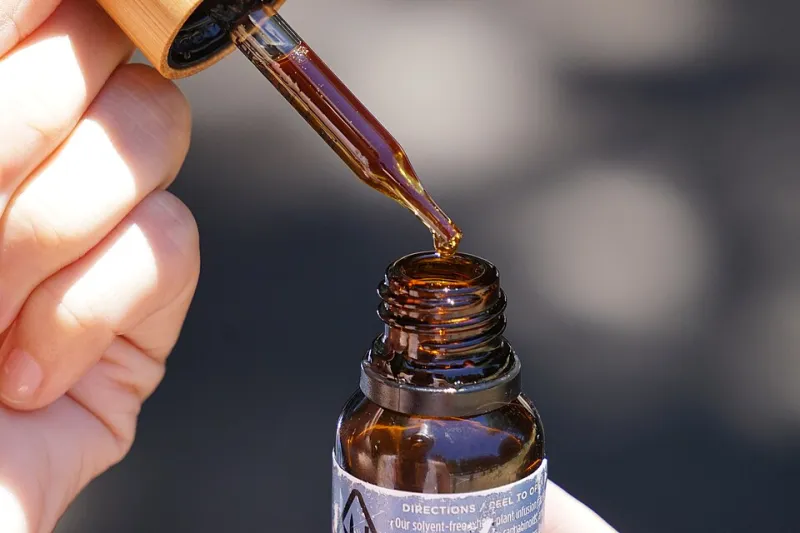
Photo: Paul Hudson from United Kingdom, CC BY 2.0, via Wikimedia Commons
Why the medicine cabinet matters more at high strength
CBD is often discussed as if it sits outside the ordinary rules of pharmacology. It does not. Cannabidiol is metabolised by liver enzymes and can inhibit several cytochrome P450 pathways, which are the same pathways used by many widely prescribed NHS medicines. At low occasional doses the practical effect may be modest. At high-strength daily doses, especially with full-spectrum products, the interaction profile deserves more careful attention.
This is not an argument against CBD. It is an argument for dose-aware, medicine-aware use. The relevant question is not simply 'is CBD safe?' but 'is this dose, in this person, alongside these prescriptions, being managed with appropriate professional oversight?'
The pathways in plain English
CBD is principally metabolised by CYP3A4 and CYP2C19, and it can inhibit CYP2C9, CYP2C19, CYP3A4 and CYP2D6 to varying degrees. It also affects some glucuronidation pathways. In practical terms, adding a high-strength CBD product to a medicine regimen can change the concentration of another drug by affecting how quickly it is cleared.
The direction is not always predictable. A person's age, liver health, genetic enzyme activity, smoking status, alcohol use and other medicines all influence the result. Nor is the effect limited to the first dose. Enzyme inhibition can develop over days, and it may matter more when CBD is taken consistently rather than occasionally.
Red-flag combinations
Some combinations deserve particular caution because the prescribed medicine has a narrow therapeutic index or a well-recognised interaction profile.
Warfarin is the clearest example. It is monitored through INR, and CBD inhibition of CYP2C9 may alter warfarin exposure. A high-strength CBD user on warfarin should not wait for a bruise or a nosebleed before seeking advice. INR monitoring is the appropriate safeguard, and the prescriber needs to know about the CBD product and dose.
SSRIs and related antidepressants are common NHS prescriptions. Several are metabolised through CYP2D6 and CYP2C19, and CBD may affect plasma levels. There is also a broader need for caution when sedating medicines are combined, because CBD can add to drowsiness even when the enzyme interaction is uncertain. Serotonin-related risk is less well characterised for CBD than for some other drugs, but unexpected agitation, sweating, tremor or confusion warrants urgent medical advice.
Epilepsy treatment is a specialist area. Clobazam, in particular, has a well-documented interaction with CBD through CYP2C19, and its active metabolite can accumulate. Valproate and lamotrigine also require careful discussion because of liver and sedation issues. Readers should not alter epilepsy medication on the basis of an online article. Any change belongs with the neurology team.
Blood-pressure medicines are a further group. Some calcium-channel blockers are CYP3A4 substrates, and CBD may increase exposure, potentially causing dizziness or low blood pressure. Beta-blockers and other antihypertensives may not share the same enzyme route, but the cumulative effect on blood pressure still warrants monitoring.
The wider red-flag list includes transplant medicines such as tacrolimus and ciclosporin, some chemotherapy agents, and other narrow-therapeutic-index drugs. A high-strength user who is also taking any of these should treat the combination as a reason to speak to a pharmacist before continuing.
Why dose strength changes the profile
The phrase high-strength is not standardised. A 50 mg daily dose and a 200 mg daily dose are not equivalent in interaction potential. Frequency matters as well as amount. Full-spectrum products introduce minor cannabinoids and terpenes whose contribution is not fully understood, while isolate products remove that variable but do not remove the CYP450 effect of CBD itself.
Method of administration also matters. Oral oils are subject to first-pass metabolism, whereas vaped or sublingual products may produce different exposure patterns. A product taken once for a stressful evening is a different pharmacological event from a high-strength daily regimen. For readers of CBD Intense, the practical lesson is to treat dose, duration, spectrum and route as part of the same risk assessment.
Preparing for the GP or pharmacist conversation
A useful conversation starts with evidence rather than assertion. Bring the product packaging, the batch certificate if available, the CBD concentration per millilitre or per serving, the daily amount actually taken, and the time of the last dose. Bring a complete medicine list, including over-the-counter products and supplements.
Ask a specific question: 'Given this CBD dose and these prescriptions, what interactions should we monitor for, and which symptoms would mean I should stop and seek advice?' A community pharmacist is often well placed to run an interaction check. For warfarin, epilepsy medicines, transplant drugs or chemotherapy, the specialist prescriber should be involved.
Do not stop or change a prescribed medicine without advice. Do not use CBD to self-treat a condition that is already under NHS management. If a suspected interaction occurs, report it through the Yellow Card scheme and seek clinical advice. The aim is not to create alarm but to make high-strength CBD use legible within ordinary NHS care.