Lot Number, Lot Behaviour: Reading Batch Variation in High-Strength CBD
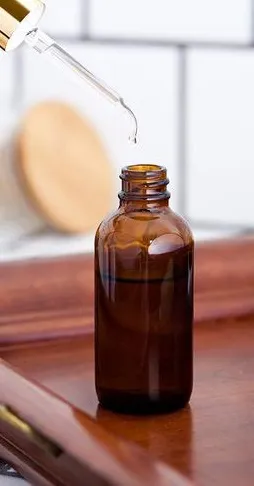
Photo: Ohiamjk, CC BY-SA 4.0, via Wikimedia Commons
A 1,500mg bottle is not a document; it is a snapshot of a single production run. The bottle purchased in March and the bottle purchased in June may share a label, a barcode and an advertised strength, yet differ in ways an experienced user will register within twenty minutes: onset, depth, duration and the character of the following morning. That difference is not automatically evidence of bad faith. It is a consequence of how cannabinoid products are manufactured, tested and stored — and understanding it is central to reading high-strength CBD honestly.
Batch, lot and the fiction of a fixed product
In manufacturing, a batch or lot is a discrete quantity produced in one cycle from one set of inputs. Everything upstream of that cycle can move. Hemp plants from different harvests vary in cannabinoid and terpene content; extraction yields differ between runs and methods; a carrier oil from a new supplier can behave differently in the mouth and in the bottle. In a 5% oil these differences usually sit below the threshold of perception. At 20% and above, small proportional differences become legible — and occasionally pronounced.
The practical implication is straightforward: a brand that publishes one glossy figure and one undated certificate is describing a product that does not exist. A brand that publishes a specification range and a certificate per lot is describing the product you actually hold.
The four variables that move most
Cannabinoid profile
Total CBD is an aggregate and aggregates conceal composition. A bottle declaring 1,000mg may mean 1,000mg of CBD specifically, or 1,000mg of total cannabinoids of which CBD is the largest share. Minor cannabinoids — CBG, CBC, CBN, and trace THC — shift with genetics, harvest timing and decarboxylation. A full-spectrum oil from two harvests can differ meaningfully in the minor fraction while presenting an identical headline figure.
Carrier oil and formulation
Fractionated coconut oil (MCT) is the standard carrier for potent oils and is generally consistent, but viscosity, fill behaviour and emulsion stability vary between suppliers. Some producers blend in sunflower lecithin or other emulsifiers; others do not. Vape formulations add further variables in propylene glycol to vegetable glycerine ratios and added terpenes, which affect both throat response and apparent strength.
Age and storage
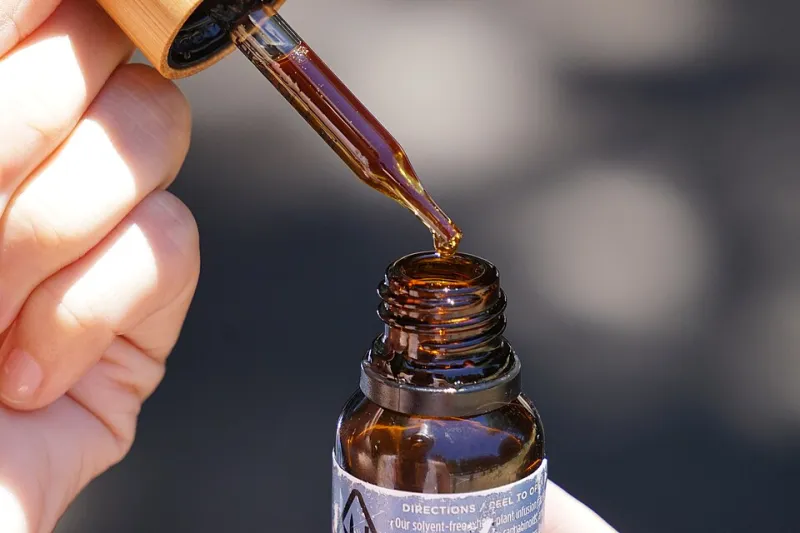
Cannabinoids oxidise. CBD degrades toward CBN over time, and heat and light accelerate the process. Two bottles from the same lot, one stored in a warm kitchen cupboard and one in a cool dark drawer, will not be equivalent at six months. Amber or opaque glass, a tight seal and a plausible best-before date are not cosmetic details.
Fill accuracy and labelling
Fill tolerances of a few per cent are normal and generally immaterial; a systematic overfill or underfill is not. Dropper calibration matters more than most buyers realise, because dose accuracy in high-strength oils depends on knowing the volume per drop or per graduation. A bottle whose dropper delivers 0.04ml rather than the assumed 0.05ml changes the arithmetic of every dose you take.
Reading a batch code in practice
Batch codes typically appear on the base of the bottle, the neck, the underside of the cap or the crimp of a sachet. Formats vary — often a date-based string such as YYMMDD, sometimes a letter prefix followed by digits, occasionally a printed fill date alongside a best-before date.
The useful move is to treat the code as a search key rather than a formality. Ask the brand for the certificate of analysis corresponding to that specific code. A certificate that carries no batch reference, or one dated before the batch could plausibly have been produced, is not evidence of anything.
Common deficiencies worth noting:
- A certificate with no sample receipt date, no named laboratory and no stated analytical method.
- Potency expressed only as milligrams per bottle, with no per-millilitre figure.
- No cannabinoid breakdown beyond a single CBD number.
- No evidence of accreditation, such as UKAS accreditation or ISO 17025.
- A generic document circulated unchanged across multiple products and multiple years.
What a certificate can and cannot tell you
A sound certificate can confirm total CBD per millilitre, the minor cannabinoid profile, THC content at trace level, and the results of heavy metal, pesticide, microbial and residual solvent testing where commissioned. Those are meaningful checks, particularly for products sold at high concentration, where a small percentage error translates into a large milligram error.
What it cannot do is tell you how the oil feels, how the bottle was handled after it left the laboratory, or how your own metabolism will respond. Nor does a single certificate demonstrate consistency; that requires two or three certificates viewed side by side, ideally from different lots, showing a controlled spread rather than a scatter.
Questions worth putting to a brand
- Do you publish a certificate for every batch, and does it reference the lot number printed on my bottle?
- What is your specification tolerance on total CBD per batch, expressed as a percentage?
- Which laboratory performs the testing, and is it accredited?
- Where was the hemp grown and in which year was it harvested?
- What is the fill date, and how is stock stored in your warehouse?
- Has the formulation changed since the previous lot?
A brand that answers these without hesitation is usually a brand with a functioning quality process. A brand that answers only the first, and only with a link to a homepage certificate, is telling you something too.
Signals of genuine consistency
Controlled products tend to share several characteristics. They publish a range rather than a single boastful figure. They distinguish harvest years and, where relevant, cultivar. They use protective packaging, legible coding and best-before dates that align with the certificate. They keep batch sizes modest, since pooling many harvests into one enormous blend smooths variation by averaging it — which is not the same as controlling it.
There is a counterintuitive point here for experienced buyers: a small producer with transparent fill dates and per-lot testing may deliver a more predictable experience than a large brand whose consistency is achieved by blending everything into an indistinguishable whole and then labelling the result with one round number.
A practical method
The most reliable approach remains record-keeping. Buy two bottles from the same lot where possible. Note dose, onset, duration and next-day clarity against the batch code rather than the product name. When a lot suits you, ask the retailer whether that lot is still in stock; when it does not, ask the brand what changed. Over a few months, this produces a personal dataset that no marketing page can substitute for.
The milligram figure is the beginning of the question, not the answer. A high-strength product earns trust not by the size of its headline number but by the discipline with which it reproduces it.