Dregs as Evidence: A Bottle-End Audit of High-Strength CBD Oils

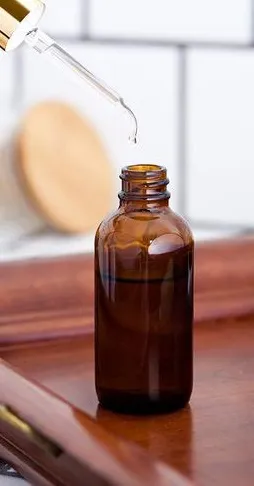
Photo: high strength CBD oil bottle with dropper final drops on laboratory bench UK, via www.motortrend.com
Most high-strength CBD reviews are written in the first week, when the bottle is full, the dropper is clean and the label is still legible. That is a convenient moment for a brand. The final two millilitres are less convenient. By then the pipette has been in and out dozens of times, the oil level is below the graduation marks and the consumer is forced to judge whether the product was designed to be used to the end or merely sold at the start.
In the UK high-strength segment, where 10ml bottles at 1,000mg or more are common, two millilitres is not a trivial residue. In a 10ml bottle it is a fifth of the contents; in a 30ml bottle it is still a meaningful final session. A bottle-end audit will not replace a laboratory certificate, but it can expose calibration claims, batch inconsistency and packaging shortcuts that a first-week review misses.
Why the final two millilitres matter
High-strength CBD oils are concentrated products sold in small volumes. That makes the end of the bottle disproportionately informative. A 10ml bottle contains only five 2ml measures. If the last two millilitres are difficult to draw, inconsistent in appearance or impossible to reach with the supplied dropper, the practical dose count falls below the label claim.
The bottle end is also where sediment, separation and residue become visible. Some of this is normal in oils that contain plant waxes or natural constituents. Some of it is a sign of poor batch control. The distinction matters. A consumer should not treat every speck as a defect, but neither should a brand treat the final doses as an afterthought.
The audit setup
A useful bottle-end audit begins before the bottle is empty. Record the lot number, the expiry date and the stated CBD content per millilitre and per bottle. Keep the bottle upright for 24 hours before the final assessment so that any sediment settles consistently. Photograph the bottle against a white background and in oblique light. Then compare the supplied dropper with a clean 1ml oral syringe, checking whether the 0.5ml and 1ml marks correspond to the same volume.
This is a consumer test, not a laboratory method. It does not measure cannabinoid content. It does, however, test whether the delivery system behaves as advertised when the product is under stress. That is the point of a bottle-end review: the first dose tests the marketing; the last dose tests the design.
Dropper accuracy at low volume
Dropper calibration is usually assessed with a full bottle. At the end, the angle of the bottle changes, air bubbles become more common and the pipette may not sit fully below the oil surface. A dropper that delivered a reliable 1ml early on may deliver less, or draw mostly air, when only 2ml remains.
Count the drops from a measured 1ml draw and compare that with the label instruction. If a brand states that 1ml equals a specific number of drops, test the claim at the start and at the end. Variation is not automatically dishonest, but a large discrepancy suggests that the dosing guidance was written for the bottle, not for the user. For high-strength oils, where small volume changes translate into meaningful milligram differences, this is not a cosmetic issue.
Residue, sediment and the last dose
Sediment at the bottom of a CBD oil is not proof of poor quality. Full-spectrum oils can contain natural plant material, and some formulations separate over time. The question is whether the sediment is consistent with the batch documentation and whether the brand instructs the user to shake or store the product in a particular way.
A more serious signal is a thick, tacky residue that clings to the glass and cannot be drawn into the pipette. If the final 2ml cannot be dispensed, the effective fill volume is lower than the stated volume. Likewise, if the last doses are visibly darker, cloudier or more particulate than the first, the user has no reliable way to know whether the cannabinoid content is uniform. That is a batch-control question, and it should be answerable through a certificate of analysis and a lot number.
Label consistency and batch discipline
A bottle-end audit should compare the physical bottle with the paperwork. Does the lot number on the glass or label match the certificate of analysis? Is the expiry date legible after repeated handling? Does the label state total CBD, CBD per ml, or both, and is the arithmetic coherent? A 10ml bottle labelled at 1,000mg should not require the buyer to guess whether that figure is total content or concentration.
Consistency across bottles is equally revealing. Two bottles from the same brand, bought at different times, should not differ radically in fill level, dropper length, label placement or oil colour without an explanation. Batch variation is normal within limits. Sloppy variation is not.
Packaging shortcuts
Some high-strength CBD bottles fail at the end because the packaging was never designed for the final millilitres. A pipette that is too short for the bottle leaves a dead volume. A narrow neck can make the last draw awkward. A dropper collar that loosens with repeated use can introduce air. None of these faults will appear in a first-week review, but they affect whether the consumer receives the full claimed quantity.
What the dregs do not prove
The final 2ml cannot establish potency, purity or safety on its own. It is a screening tool. A clean bottle end is reassuring but not a substitute for third-party testing. A messy bottle end is a prompt for questions, not a definitive verdict. The correct response is to check the certificate of analysis, ask the brand about batch consistency and compare the behaviour with other bottles from the same lot.
A practical scorecard
When assessing the final doses, score the bottle on five points: lot traceability, dropper accuracy at low volume, sediment consistency, accessibility of the last 2ml and agreement between label and paperwork. A brand that performs well across all five is demonstrating that its quality control extends beyond the first pour.
In 2026, UK buyers have plenty of high-strength CBD options and very little patience for decorative claims. The bottle end is a modest test, but it is a fair one. A product that earns its milligrams at the start should still earn them at the finish.