The Stability Test: Why High-Strength CBD Belongs on a Shelf, Not in the Fridge
Photo: amber glass CBD oil bottle on kitchen cupboard shelf, via www.shutterstock.com
High-strength CBD oil looks like a simple product: a cannabinoid-rich extract diluted in a carrier oil, bottled in 30ml. At concentrations of 1,000mg and above, however, the margins are tighter than the label suggests. A few degrees of temperature change can alter how the oil flows, how evenly it can be drawn into a syringe, and, over longer periods, how reliably the cannabinoid content holds. The common instruction to store the bottle cool and dark is sound in principle, but it is not a licence to treat the refrigerator as a laboratory. In most UK homes, a stable kitchen cupboard is the better default.
Cold is not the same as stable
Refrigeration is often adopted as a shortcut to good storage. It sounds cautious, and it feels scientific. Yet a domestic fridge is a humid, frequently opened environment with its own temperature swings, especially when the door is used for milk, condiments and the inevitable half-used jar. For an anhydrous oil, the principal risks are not microbial in the way they are for fresh food. They are physical and chemical: viscosity, phase behaviour, condensation and repeated thermal cycling.
Many high-strength CBD oils use medium-chain triglyceride carrier oils, often derived from coconut. These can cloud or thicken at refrigerator temperatures, and some may begin to solidify at the edges of the bottle. That is not necessarily a defect, but it changes the product in the hand. A chilled oil drawn into a narrow syringe can contain bubbles, flow unevenly and cling to the barrel. The result is a dose that looks precise but is harder to reproduce than the milligram label implies.
What the lab measures, and what it does not
A laboratory analysis of high-strength CBD typically reports cannabinoid content by HPLC, alongside checks for heavy metals, pesticides, residual solvents and, where relevant, microbial contamination. These tests describe the batch at the point of testing. They do not guarantee that the bottle will behave identically after weeks of storage in a warm kitchen or a cold fridge.
Cool storage can slow some degradation pathways, but temperature is only one variable. Light, oxygen and heat are usually the more actionable influences in a domestic setting. A fridge does not correct a poor closure, a clear bottle or a cap left loose. Nor does it compensate for a product that was already near the edge of its stability envelope when it arrived. The sensible reading of cool and dark is therefore not as cold as possible, but as stable as possible.
The same logic applies to batch variation. A lab report from one lot does not tell you how a different lot will behave after opening. Users who keep a note of the lot number and the date of first use have a better chance of distinguishing a storage problem from ordinary batch-to-batch difference.
Viscosity and the dosing problem
High-strength oils are often dosed in small volumes, sometimes fractions of a millilitre. At that scale, viscosity matters. A cold MCT-based oil can become thick enough to make a 0.1ml draw inconsistent, particularly if the syringe is cold as well. Warming the bottle in the hand can help, but repeated warming and cooling introduces exactly the thermal cycling that a stable shelf avoids.
This is where the fridge can create more problems than it solves. The user removes the bottle, waits for it to warm, doses, replaces it, and repeats the cycle. Each step adds handling, condensation and opportunity for error. A bottle kept at a consistent room temperature is easier to draw from, easier to mix by gentle inversion and easier to judge by eye.
Condensation, closures and the domestic fridge
A fridge is a humid place. Condensation on the cap, neck and label is common when a cold bottle is brought into a warm kitchen. A well-made closure should prevent water ingress, but moisture on the outside of the bottle can affect grip, obscure the label and encourage the cap to be over-tightened or left damp. In shared households, a small bottle can also be moved, knocked over or stored beside strong-smelling food.
Emulsified high-strength formats deserve particular caution. Oil-in-water systems are more sensitive to temperature cycling than simple oil blends, and repeated chilling and warming can stress the emulsion. If a product separates, clouds unexpectedly or shows visible droplets that were not present before, refrigeration is unlikely to be the solution. The sensible step is to stop using it and consult the manufacturer or the batch documentation.
A kitchen-shelf protocol for a 30ml bottle
- Choose an interior cupboard away from the oven, kettle, radiator, sink and sunny windowsill. A steady 15–25°C is a reasonable domestic target, and most UK kitchen cupboards meet it.
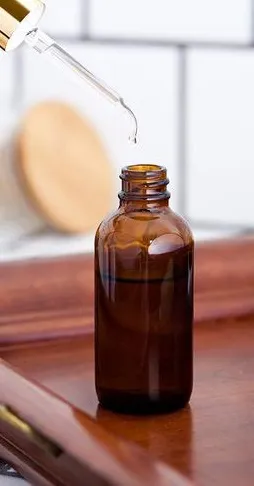
- Keep the bottle upright in its original amber or opaque container, with the cap firmly closed. Do not decant into a clear bottle for convenience.
- Avoid storing the bottle in the fridge door. If refrigeration is unavoidable, use a stable spot at the back of a shelf, not the door, and allow the bottle to reach room temperature before dosing.
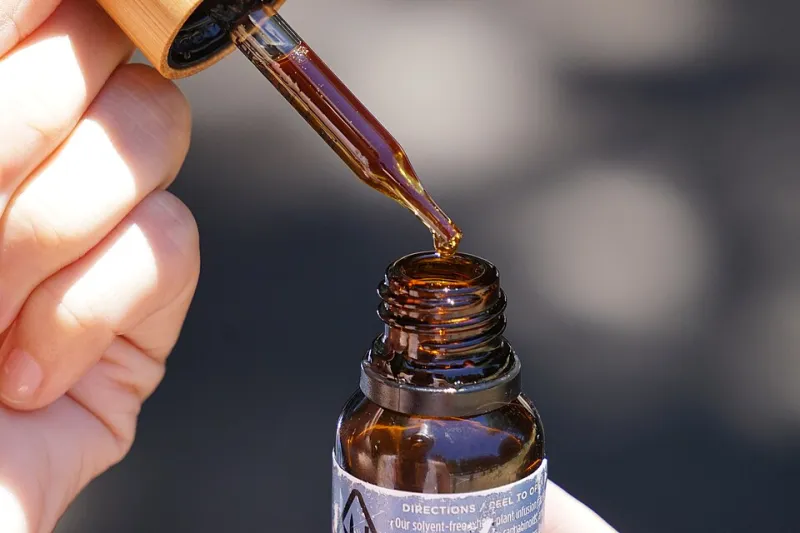
- Use a clean, dry syringe or measured dropper. Do not introduce water, saliva or a damp instrument into the bottle.
- Record the lot number and the date the bottle was opened. Note any change in colour, clarity or smell, and compare it with the batch documentation where available.
- Prefer smaller bottles if use is slow. A 30ml high-strength bottle can remain open for months, and freshness at the last draw matters as much as potency at the first.
The last draw
Storage advice should be treated as part of the measurement chain, not as an afterthought. A high-strength CBD product is only as consistent as the conditions in which it is kept and handled. For most UK users, the refrigerator is an unnecessary complication: it changes viscosity, invites condensation and encourages thermal cycling without reliably improving cannabinoid stability. A cool, dark, stable cupboard is less dramatic, but it is closer to the conditions a lab would recognise — and far easier to repeat from the first draw to the last.