The Hold-Time Question: What Sublingual Duration Really Does to a High-Strength CBD Dose
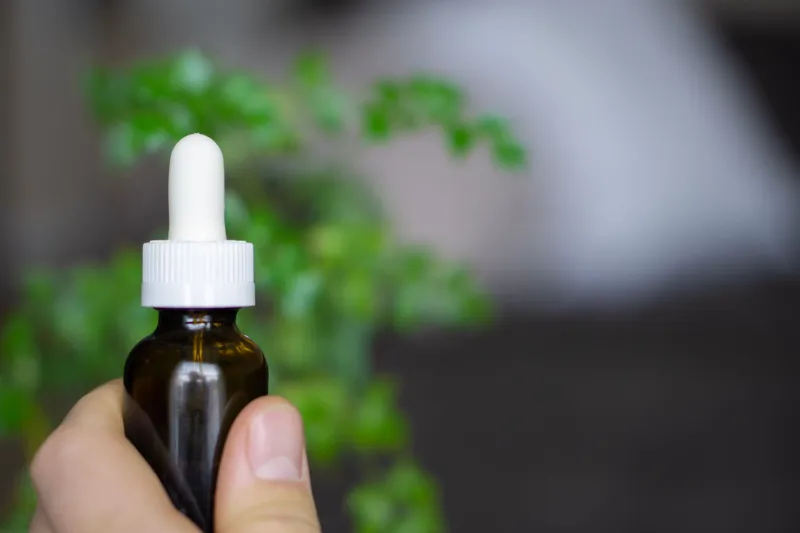
High-strength CBD oils invite a particular kind of experimentation. The bottle is potent, the dropper is small, and the advice is familiar: hold it under the tongue for as long as possible. But duration is only one variable in a delivery method shaped by anatomy, formulation and individual habit. For UK users who have moved beyond starter products, the useful question is not whether longer is always better, but what hold time actually changes — and what it does not.
What the mouth can and cannot do
The floor of the mouth is lined with a thin, highly vascular mucous membrane. In plain English, it is a relatively permeable surface sitting close to a rich blood supply. A CBD oil held sublingually may be absorbed through this tissue before it is swallowed, which can allow a portion of the dose to enter the bloodstream without passing immediately through the liver. That is the basis of the familiar claim that sublingual use offers better bioavailability than simply swallowing an oil.
The qualification is important. Bioavailability is not a single switch. It is the fraction of a dose that reaches systemic circulation in a usable form, and it depends on the formulation, the carrier oil, droplet size, the presence of emulsifiers or ethanol, saliva flow, and how much of the oil is inevitably swallowed. A high-strength product contains more CBD per millilitre, but concentration alone does not guarantee that more CBD crosses the oral mucosa. A thick oil may cling to the tongue; a thinner one may disperse and be swallowed more readily. Neither outcome is automatically superior.
Thirty seconds, two minutes, five minutes
Thirty seconds is enough time for many oils to coat the sublingual area, but it is also short enough that some of the dose will be swallowed with saliva. Two minutes is often presented as the practical middle ground: long enough for meaningful contact, short enough to be manageable in daily life. Five minutes is where marketing language tends to outrun physiology. Longer contact may increase opportunity for absorption, but it also encourages saliva accumulation, dilution and the urge to swallow. The relationship is unlikely to be linear.
For high-strength oils, the volume required is often small. A 10 per cent or 20 per cent product may deliver the intended milligram load in a few drops, which means the oil film under the tongue can be thin. In that situation, a longer hold may make little difference if the formulation has already dispersed. Conversely, a more viscous oil may benefit from a little more time, but not indefinitely. The sensible conclusion is that hold time is product-specific and person-specific, not a universal rule to be extended until discomfort sets in.
A cautious self-observation framework
Experienced users who want to explore hold time should change one variable at a time. Choose a single product and, where possible, a single batch. Keep the dose, time of day and route consistent. Avoid introducing new supplements, changing caffeine intake or altering sleep patterns during the observation period. Then compare hold times in a structured way: for example, thirty seconds for one week, two minutes for the next, and five minutes for the week after. Do not escalate on consecutive days simply because the first experience felt weaker or stronger.
Record onset, perceived intensity and duration using a simple scale, along with any next-day effects. Onset may range from fifteen minutes to two hours depending on the person and product. A five-minute hold that produces no clear difference from thirty seconds is useful information, not a failure. Stop if the oil causes irritation, numbness or an unpleasant taste that lingers. This is self-observation, not a clinical trial, and it should not replace advice from a pharmacist or doctor, particularly for anyone taking prescription medicines.
Why 'hold it longer' is not a universal fix
The shorthand persists because it is easy to communicate and flattering to the idea that discipline unlocks potency. It also conveniently implies that a disappointing product may simply have been used incorrectly. But sublingual absorption is influenced by oral anatomy, saliva, formulation and the amount swallowed. A person with a dry mouth may retain an oil differently from someone with a wet mouth. A highly refined oil may behave differently from a whole-plant extract. High strength raises the stakes, but it does not make duration the dominant variable.
A more credible approach for UK buyers is to treat hold time as one small lever among several. Check whether the brand publishes batch-level laboratory analysis, keep a consistent dose, and avoid assuming that a longer hold compensates for a product whose formulation or potency is unclear. The milligram figure on the label is a starting point, not a guarantee of delivery. The sublingual stopwatch is a useful tool for personal observation, but it is a poor substitute for product quality and sensible dosing.
Practical conclusions
For most experienced users, a hold of one to two minutes is a reasonable default to test before extending further. Thirty seconds is a legitimate comparison point, not a beginner's error. Five minutes should be treated as an experiment rather than a standard. The aim is not to endure the longest hold, but to find a repeatable method that suits the product and the person. In a market full of high-strength claims, that kind of restraint is more useful than another minute under the tongue.